When Your Body Learned It Was Not Safe to Be Believed
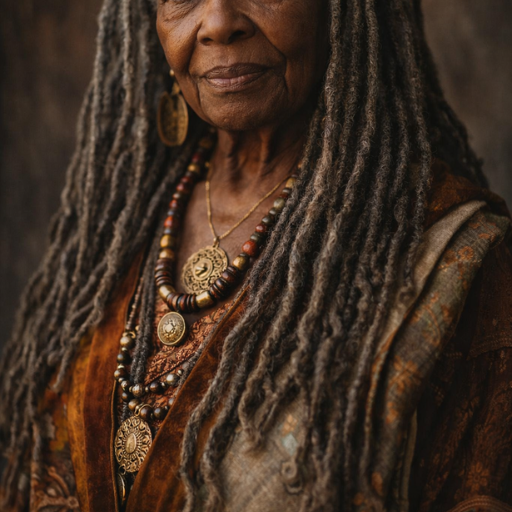
"Your life will answer the way you live it." Grandma
Many adults are walking through life with a quiet pain sitting underneath everything they do. On the outside, it may look like self-doubt, overthinking, people-pleasing, perfectionism, fear of failure, or a constant feeling of not being enough. But underneath those behaviors is often something much deeper. It is the pain of growing up unseen, unbelieved, and unsupported in moments when care was needed the most.
When a child is raised by a mother or father who does not believe in them, something begins to form inside that child very early. The child starts to question their own reality. They begin to wonder whether their needs matter, whether their voice has value, and whether who they are will ever be enough to receive love, safety, or trust. This does not stay in the mind alone. It enters the body. It enters the emotions. It enters the spirit.
Sometimes one painful moment becomes the event that seals the wound.
A young girl stands in line at school and tells the teacher she needs to go to the restroom. Her body is already speaking clearly. Her need is real. Her request is honest. But the teacher does not believe her. She is made to stay where she is. The pressure in her body builds. The fear builds. The helplessness builds. Then the unthinkable happens. She urinates on herself in front of others. Shame enters the room. Embarrassment floods her whole system. And in that moment, something more than an accident takes place.

Her body learns, “Even when I tell the truth, I may not be believed.”
Her mind learns, “My needs are a problem.”
Her emotions learn, “Being vulnerable is dangerous.”
Her spirit learns, “I am alone in my experience.”
This is how a wound becomes bigger than the moment itself. It is no longer only about what happened in the classroom. It becomes a pattern inside the person. If there were already experiences at home where a mother or father did not believe in her, did not affirm her, did not protect her inner reality, then this moment at school would not feel isolated. It would feel familiar. It would confirm what was already being taught in silence. It would deepen the belief that her truth does not carry weight and that she, somehow, is not enough.
That is how childhood pain becomes adult identity if it is left unnamed.
As the child grows into adulthood, the original wound often hides itself behind everyday struggles. She may become someone who overexplains herself because she is afraid no one will believe her the first time. She may become highly sensitive to criticism because every correction touches the old shame. She may hesitate to speak up about her needs because her body remembers what it felt like to be denied in a vulnerable moment. She may work too hard to prove her worth, not because she is lazy or broken, but because some part of her is still trying to outrun humiliation.
This is what many people call low self-esteem, but that phrase is often too small for what is really happening. This is a body carrying memory. This is a mind repeating conclusions it formed in pain. This is an emotional life shaped by shame and helplessness. This is a spirit trying to recover its dignity.
The body never forgot that moment.
The body remembers the urgency, the pressure, the fear, the exposure, and the absence of protection. This is why certain situations in adulthood may create a strong reaction that seems larger than the moment. The nervous system is not confused. It is remembering. It is responding to old pain that was never fully soothed, witnessed, or released.
The mind then builds a life around that pain. It may create beliefs such as, “I am embarrassing.” “I have to get everything right.” “I cannot trust people to support me.” “I should not need anything.” “I am not good enough.” These thoughts do not come from truth. They come from adaptation. They are the mind’s attempt to make sense of what the body and emotions went through.
The emotions often carry the heaviest burden. Shame, grief, anger, powerlessness, fear, and sadness can remain trapped for years when a person never had the language or safety to process what happened. Many adults do not know they are still carrying childhood humiliation in their emotional world. They only know they feel small, anxious, easily hurt, or chronically inadequate.
And then there is spirit.
Spirit suffers whenever a child’s truth is denied. Spirit is the place of inner knowing, dignity, and connection to what is real. When a child has repeated experiences of not being believed, they can begin to disconnect from that inner knowing in order to survive. They learn to doubt themselves before someone else can do it for them. They abandon themselves internally because that feels safer than being rejected externally.
This is why healing must be deeper than motivation.
A person cannot think their way out of a wound that lives in the body, mind, emotions, and spirit. Real healing begins when the old experience is named clearly and honestly. The issue was never that the child was not good enough. The issue was that the adults around her failed to honor, protect, and believe her. Their failure became her shame, and that shame became her identity. That is the lie that must be broken.

The R.A.A.C. © System matters here.
Responsibility. Accountability. Awareness. Consciousness.
Responsibility means choosing to tend to that wound now instead of letting it continue to run every relationship, decision, and self-perception.
Accountability means noticing where the old pain still causes self-abandonment. It means telling the truth about the patterns that formed from the wound.
Awareness means seeing that the feeling of not being good enough did not appear from nowhere. It has a history, definite roots, and a core memory.
Consciousness means remembering that the adult self now has the power to do what the child could not do. The adult can listen to the body. The adult can honor the need. The adult can speak the truth. The adult can offer protection, compassion, and belief to the younger self.
One of the deepest forms of healing for this kind of wound is learning to say, “I believe what happened to me, and I believe what my body is saying.”
That is not a small sentence. That is restoration.
The person carrying this wound may need to sit quietly, meditate and travel to that point in time that younger self with tenderness and truth. Not to relive the humiliation, but to bring care into the place where care was missing. To say inwardly, “You were telling the truth. Your body was telling the truth. You were not bad. You were not disgusting. You were not weak. You were a child who needed help, and the adults failed you. Their failure does not define your worth.”
This is how self-trust begins to return.
Healing also looks like honoring present-day needs without apology. Rest when the body is tired. Speak when something feels wrong and know when that wrong is a triggered response that you alone get to address. Set boundaries when something is harmful to your growth and development. Ask for support when the heart is overwhelmed. Tell the truth (facts over feelings) before the mind has time to shrink it. Every time a person listens to their inner reality with honesty and integrity, they are repairing what was once broken.
There may also be times when deeper support is needed. A trauma-informed therapist, counselor, or skilled healing practitioner can help a person process the shame and nervous system imprint connected to early humiliation and neglect. There is no weakness in getting help. There is wisdom in no longer carrying pain alone.
The truth is simple, even when the wound is deep.
A person who feels they are not good enough is often carrying old moments when their humanity was not honored. They are not broken. They are burdened. They are not failing. They are responding to what their system learned long ago. And what was learned in pain can be unlearned in truth.
The journey home begins when a person stops measuring their worth by the moments they were disbelieved and starts rebuilding life from the truth of who they are.
What was shamed in childhood must be held with truth in adulthood.
Grandma’s truth is this: when your body was not believed, your spirit learned to hide. Healing begins when you believe yourself again.